
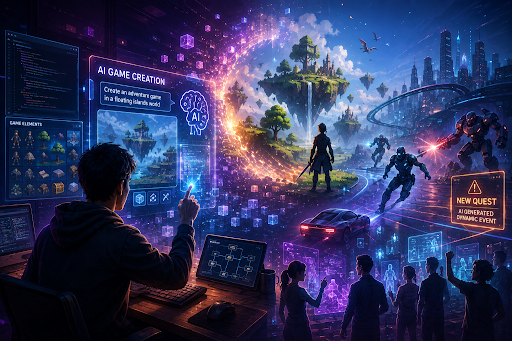
The Growing Influence of AI on the Online Gaming Industry
Industries rarely change because of one single breakthrough. They change because a handful of smaller shifts compound over time until the old way of doing things stops making sense. That’s roughly where the online gaming industry finds itself with AI right now, not one dramatic moment, but a steady accumulation of changes across development, player experience, and who gets to participate at all.
Why This Influence Has Grown Gradually, Not Suddenly
Early AI-assisted tools in gaming were narrow, useful for specific tasks but far from reshaping how the industry actually operated. What’s changed is the breadth of what these tools now handle well, moving from isolated conveniences to something closer to a foundational shift in how games get built, tested, and maintained. That gradual expansion is exactly why the influence can feel sudden in hindsight, even though it built up steadily over several years.
Where AI’s Influence Shows Up Most Clearly
Development Speed Across Studios of Every Size
Faster iteration used to be an advantage reserved for larger studios with bigger technical teams. AI has narrowed that advantage significantly, letting smaller teams and even solo creators move through development cycles that used to require considerably more resources. This is reshaping competitive dynamics across the entire industry, not just at the margins.
A Widening Pool of Creators Entering the Space
The technical barrier that used to filter out most potential creators has weakened considerably. People with genuine game ideas but no programming background are now building and shipping real projects, which is steadily expanding the population of people actively shaping what the industry produces.
Player Experiences Becoming More Responsive
AI is making it more practical for games to adapt meaningfully to how individual players actually behave, rather than treating every player identically. This kind of responsiveness used to require heavy manual scripting for each scenario. It’s becoming far more achievable now, gradually raising what players expect from the games they play.
How This Influence Is Reshaping Competitive Dynamics
Smaller Studios Competing With Larger Ones
As the tools available to small teams keep closing the gap with what larger studios can produce, competitive advantage is shifting away from sheer resources and toward design judgment and iteration discipline. This is a meaningful change for an industry that has long rewarded scale above almost everything else.
Faster Response to What Players Actually Want
Studios of every size are increasingly able to respond to player feedback in days rather than months, tightening the relationship between what players ask for and what actually gets built. This shift is quietly raising the baseline expectation across the industry for how responsive a game and its developers should be.
A Clear Example of AI’s Influence in Practice
Papercut.io reflects where this influence is already visible, a genuinely inventive mechanic built with a level of polish that shows how far AI-assisted development has come, without requiring the large technical pipeline that a project like this once demanded.
Who’s Driving This Growth From the Ground Up
A meaningful share of the industry’s newest creators are people trying an AI game maker for the first time, often with no prior development experience at all. Their steady entry into the space isn’t a passing trend, it’s a structural shift in who gets to participate in building the games that shape the industry’s future, and their influence on what kinds of games actually get made is only growing.
What This Growing Influence Doesn’t Replace
The Need for Genuine Creative Vision
AI-assisted tools can execute described mechanics quickly, but they don’t decide what makes a game worth playing in the first place. That judgment remains entirely human, and it’s arguably becoming more valuable as technical execution becomes less of a bottleneck across the industry.
The Importance of Real Player Feedback
No amount of AI-driven speed replaces the value of watching how real players interact with a game and adjusting based on what actually happens. As iteration gets faster industry-wide, honest playtesting becomes more important, not less, since there’s more opportunity to act on it before decisions get locked in.
Studios’ Need to Differentiate Through Design
As technical execution becomes more accessible across the board, the games that stand out increasingly do so through design choices rather than technical capability alone. This is quietly raising the bar for what counts as a genuinely well-designed game, since baseline production quality is no longer the differentiator it used to be.
Where This Influence Is Likely Headed Next
As AI tools continue to mature, their influence on the industry is likely to keep compounding rather than leveling off. More creators entering the space means more experimentation happening in parallel, which tends to surface more genuinely different ideas than a smaller number of well-resourced studios working through longer, more isolated development cycles ever could. The industry’s center of gravity is shifting gradually toward a wider, more varied group of contributors, and that shift shows no clear sign of slowing down.
Final Thoughts
The growing influence of AI on the online gaming industry isn’t about replacing what makes games worth playing, it’s about steadily removing the technical friction that used to limit who could build them and how quickly the industry as a whole could evolve. What has always separated a great game from a forgettable one hasn’t changed. What’s changed is how much faster that difference can now be tested, refined, and brought to players across an industry that keeps growing more open by the year.